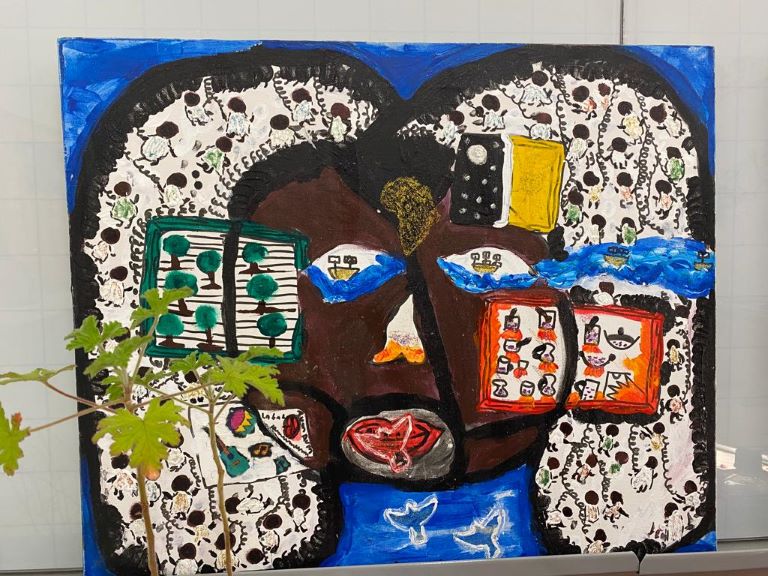
Isabel Cristina Raphael Vieira also known as Isa do Rosário, has performed storytelling and other activities - such as lectures and exhibitions aimed at disseminating and preserving the Afro-Brazilian culture - for over 15 years, both in the city of Batatais and in other cities across the São Paulo region.
2023 Biennial Year Find out more
Vieira’s art is rooted in her African ancestry. Her grandmother was the daughter of enslaved people and her grandfather, born in Angola, was enslaved in Brazil. As a child, she would weave with her grandmother, cutting cloth squares to be woven into a quilt or a rug.
Vieira works in order to spread the word of the Ancestors, and believes that “nothing in this life actually belong to us, everything is lent to us, we’re not taking any of it with us and so need to take better care of it.”
She most recently worked as a Pharmacy Technician, where she developed improvements in the field of phytotherapy (study of plants). For two years (from 2011 to 2012) she held an internship at the Museu Histórico e Pedagogical Dr. Washington Luís de Batatais, where she developed numerous studies focused on guided tours and educational activities.
Her art has been exhibited in schools and cultural spaces in Batatais, Franca, Brodowski and other cities in the São Paulo region. This is the first time her work has been shown outside of Brazil.
Liverpool Biennial 2023
Dance with Death on the Atlantic Sea
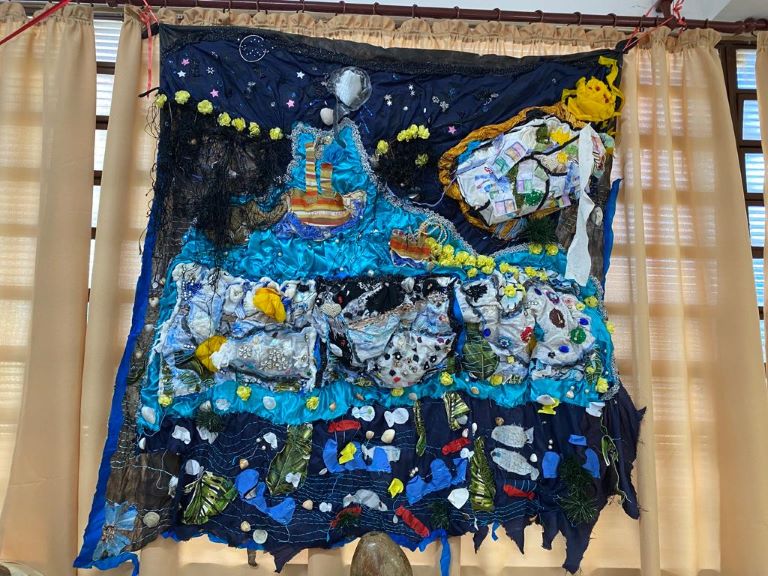
In the creation of her textile works, Isa do Rosário is led by spiritual conversation with Orixás (pronounced ‘oh-ri-shas’). According to Candomblé, an African religion that developed in Brazil during 19th century, Orixás are believed to be ancestors who have been deified and who represent the forces of nature. This piece, entitled ‘Dance with Death on the Atlantic Sea’ (2013-2023), represents the life and death at the bottom of the sea. On one half, we see small black dolls named Abayomi. Meaning ‘precious meeting’ in the Yoruba language, here, the artist uses them to represent Black people and bodies, a memorial to all those who lost their lives during the Transatlantic Slave Trade. The work creates a meditation space that,
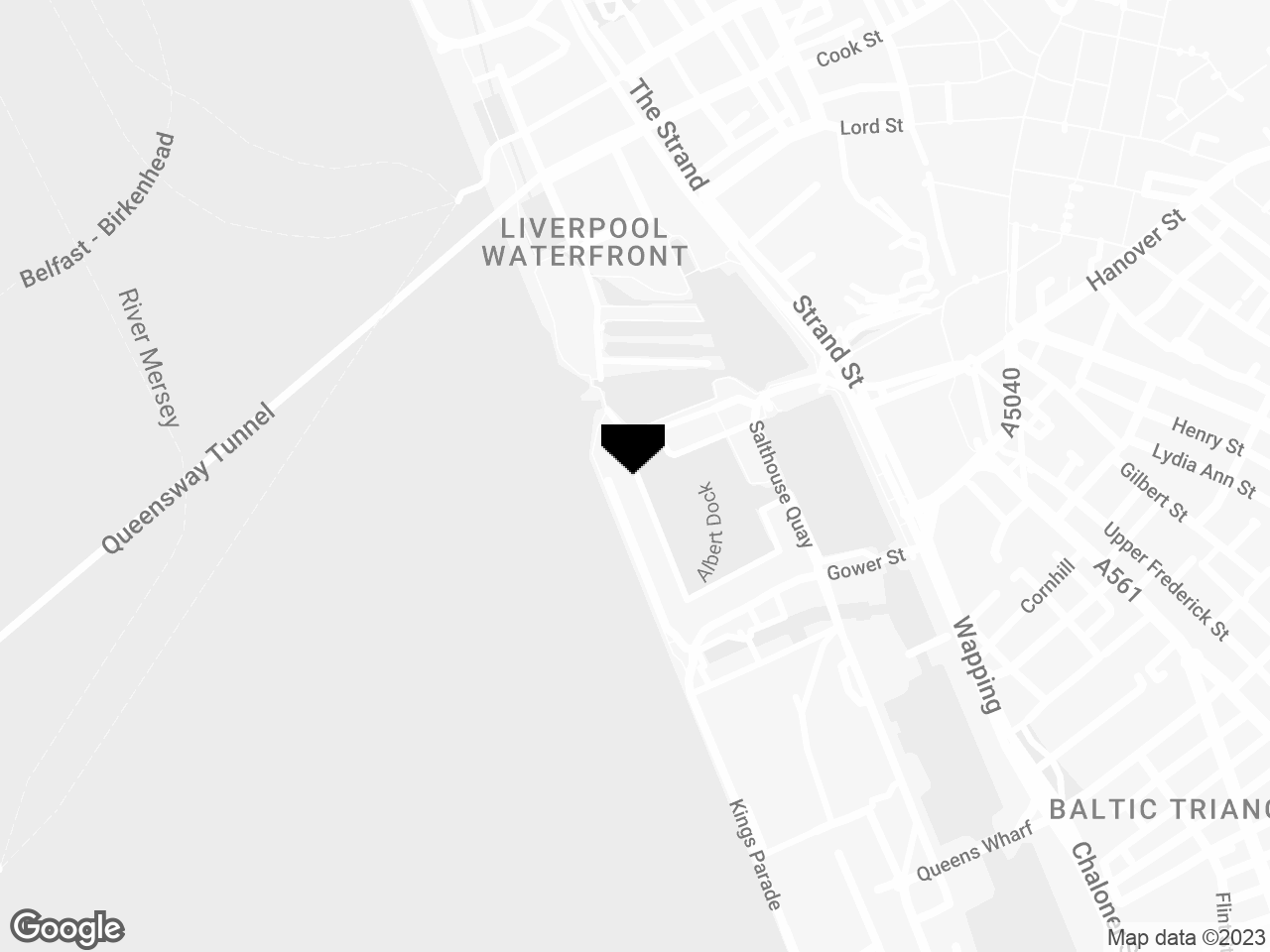
In the creation of her textile works, Isa do Rosário is led by spiritual conversation with Orixás (pronounced ‘oh-ri-shas’). According to Candomblé, an African religion that developed in Brazil during 19th century, Orixás are believed to be ancestors who have been deified and who represent the forces of nature. This piece, entitled ‘Dance with Death on the Atlantic Sea’ (2013-2023), represents the life and death at the bottom of the sea. On one half, we see small black dolls named Abayomi. Meaning ‘precious meeting’ in the Yoruba language, here, the artist uses them to represent Black people and bodies, a memorial to all those who lost their lives during the Transatlantic Slave Trade. The work creates a meditation space that, via the Orixás, hopes to offer safe passage for the souls that linger in the depths of the ocean. Showing at Tobacco Warehouse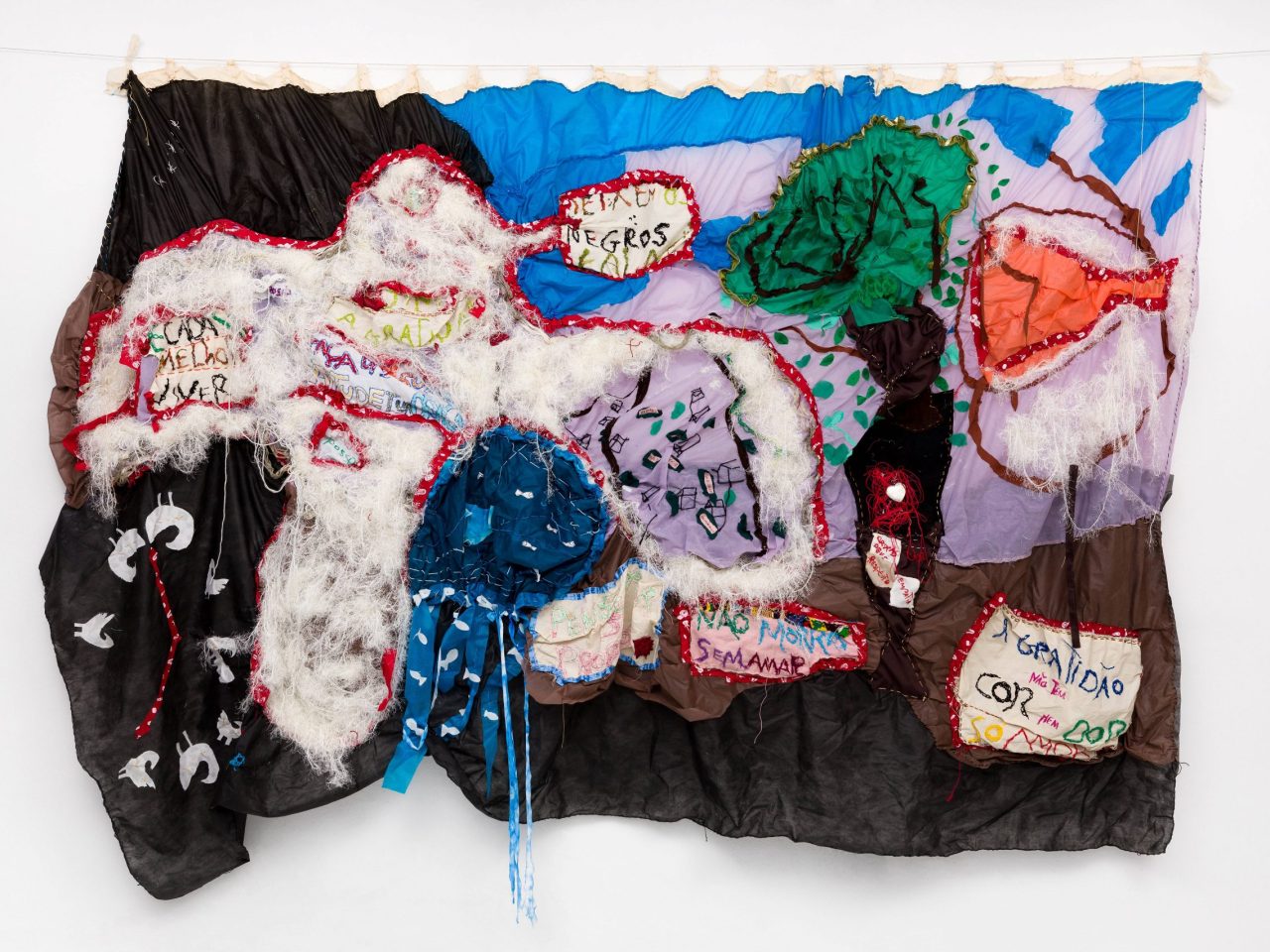
Dance with Death on the Atlantic Sea
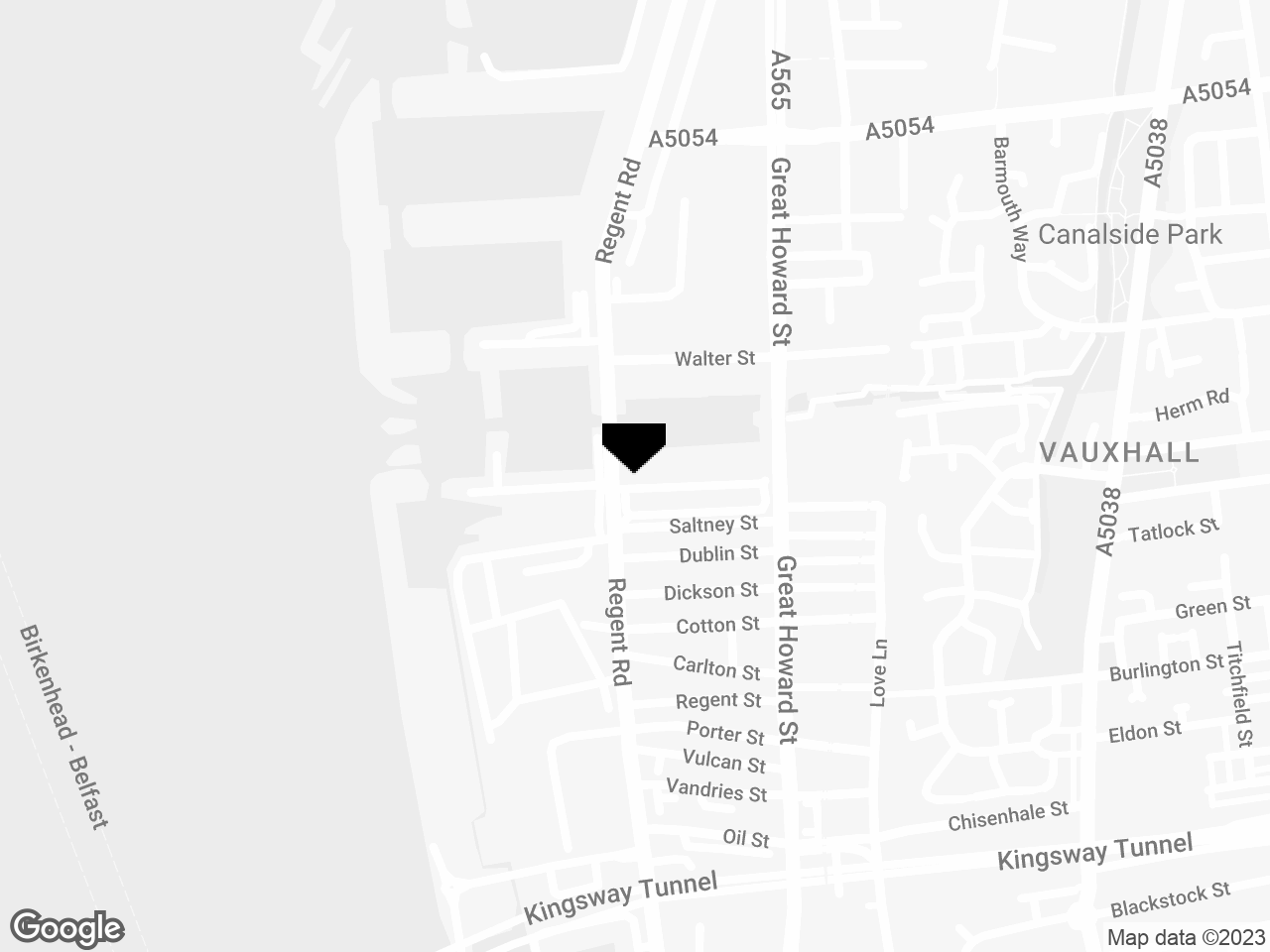
Showing at Tobacco Warehouse
Wednesday - Sunday 10am - 6pm-

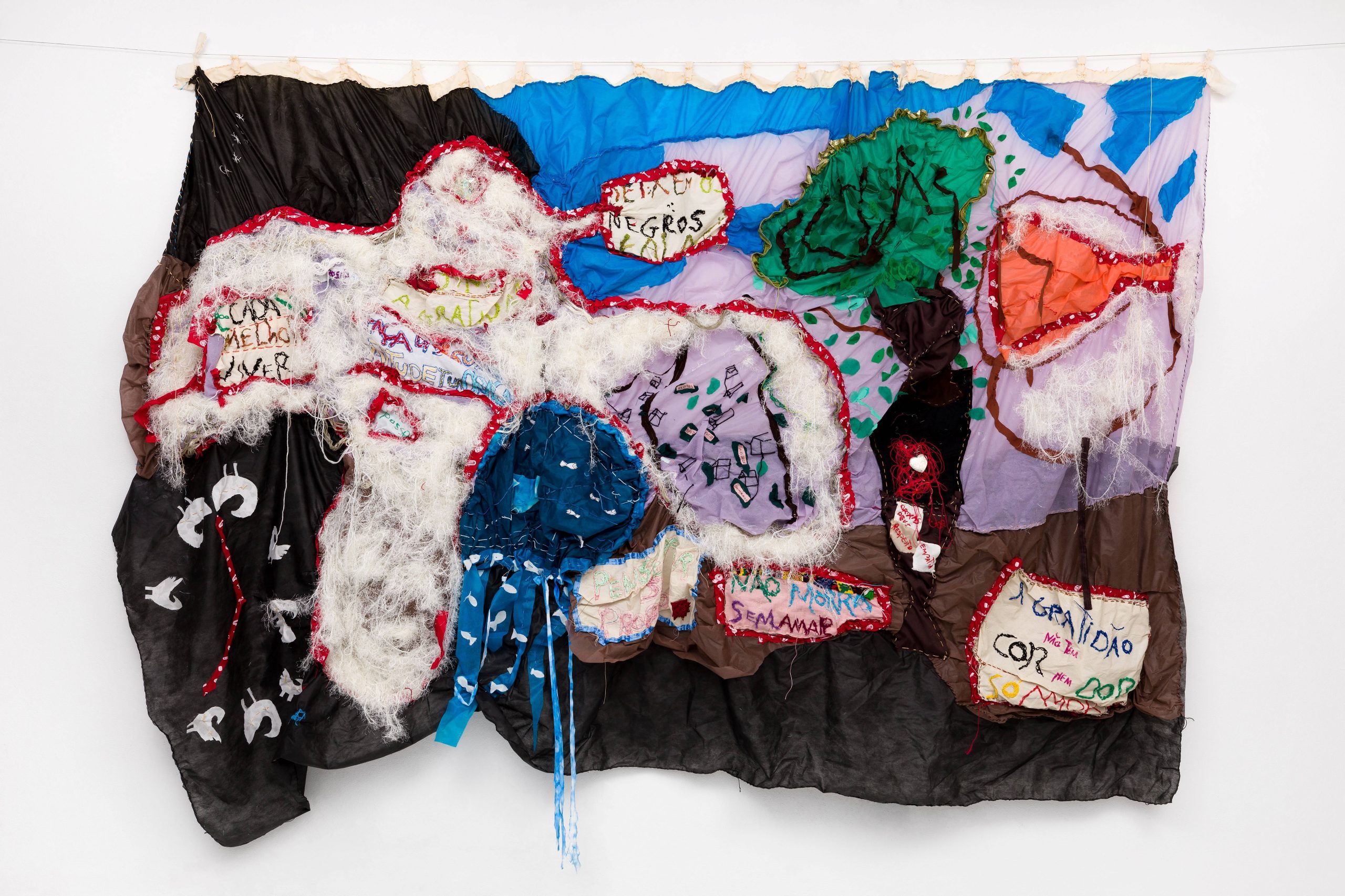
Isa do Rosário. Ossaim. Mitre Galeria, Belo Horizonte. Photography by EstudioEmObra.
-

Isa do Rosário -
Isa do Rosário